

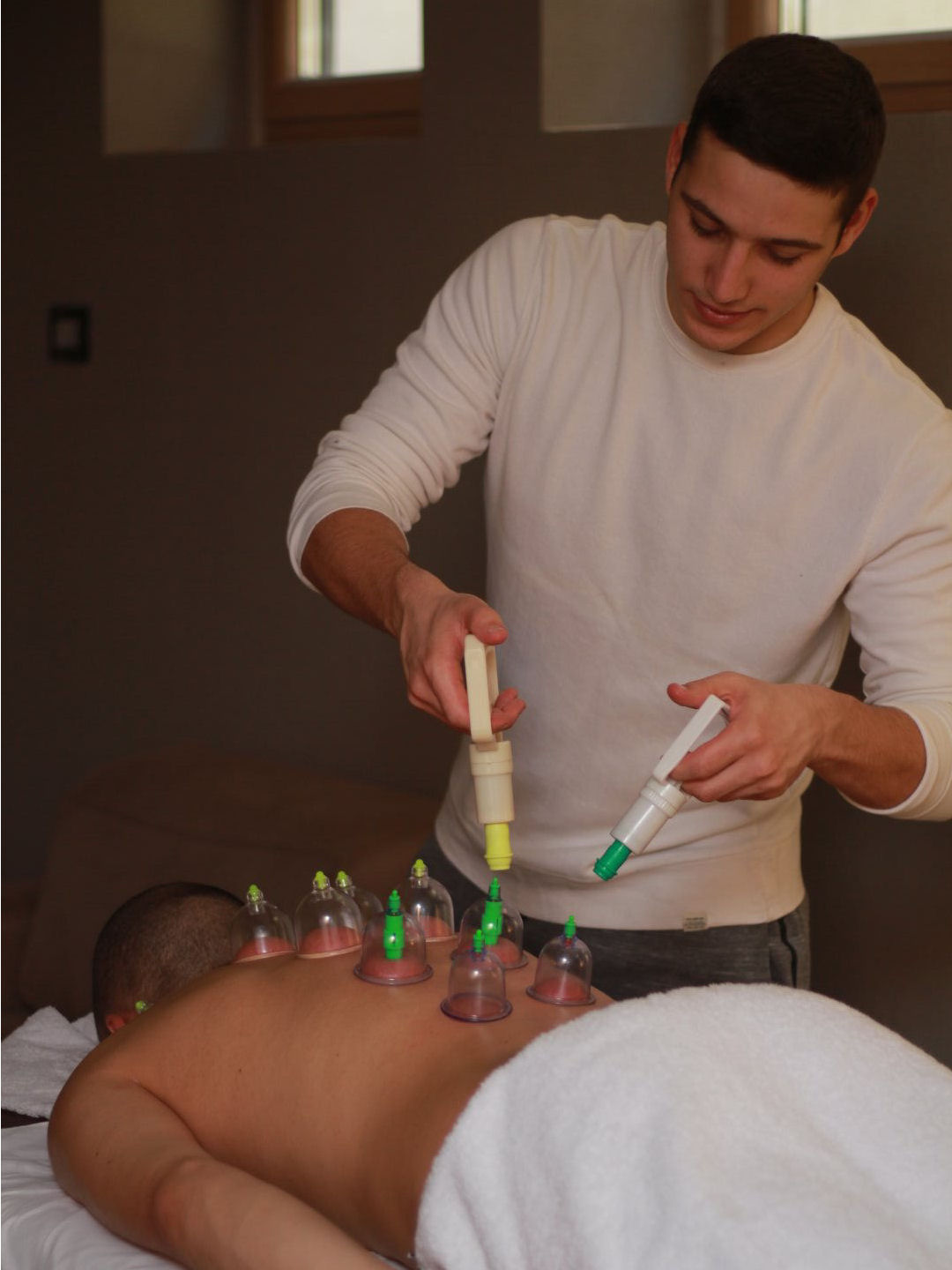
Dry Cupping

Wet Cupping
Dry Cupping
Dry cupping, also known as non-incisional hijama, is a traditional technique that uses vacuum cups to improve circulation and relax the body. This method has become increasingly popular in modern alternative medicine and is often combined with massage to achieve optimal results.
What is Dry Cupping?
Dry cupping involves placing cups on the skin using suction, without making any cuts. The vacuum creates gentle pressure that lifts the skin and underlying tissue, stimulating circulation and relieving muscle tension.
Benefits of Dry Cupping:
- Improved Circulation: Promotes blood flow in the treated area, aiding tissue regeneration.
- Muscle Relaxation: Reduces tension and cramps.
- Detoxification: Supports the elimination of toxins through improved lymphatic flow.
- Pain Relief: Effective for chronic pain, headaches, and back pain.
- Metabolic Stimulation: Increases oxygen and nutrient delivery to tissues.
- Relaxation & Stress Relief: Contributes to both physical and mental relaxation.
How the Treatment is Performed?
- Preparation: The skin is cleaned and prepared for the treatment.
- Cup Placement: Glass, plastic, or silicone cups are applied to the skin and secured with suction.
- Duration: Cups remain on the skin for 5–15 minutes, depending on the area and treatment goal.
- Completion: After removing the cups, a light massage may be applied for additional relaxation.
Why It’s Popular?
- Non-invasive and painless method
- No recovery time, allowing clients to resume daily activities immediately
- Can be adapted for relaxation or therapeutic goals
Client Advice:
- Drink plenty of water before and after the session to aid detoxification.
- Avoid heavy physical activity after treatment.
- Consult a professional if you have certain health issues (skin conditions, blood pressure problems, etc.).


Wet Cupping
Detoxification for better health!
Wet cupping, also known as medical or humid hijama, is a traditional method that involves extracting a small amount of blood from the body using vacuum cups and tiny incisions on the skin.
This practice has a long history and is most commonly used in Islamic, Arab, and Asian medicine.
How Wet Cupping is Performed?
Skin Preparation: The treatment area is cleaned and disinfected.Cup Placement: Cups are applied, creating suction through air or heat.
Small Incisions: After removing the cups, tiny shallow cuts are made on the skin using a sterile scalpel.
Reapplication of Cups: Cups are placed again to draw out a small amount of blood, traditionally considered “harmful” or “stagnant.”
Benefits of Wet Cupping:
Detoxification: Traditionally believed to help remove toxins from the body.Improved Circulation: Stimulates better blood flow in treated areas.
Pain Relief: Helps reduce muscle, joint, and back pain.
Energy Balance: According to traditional teachings, it balances the body’s energy.
Important Notes:
• Sterile instruments are essential to prevent infection.
• Not recommended for pregnant women, people with haemophilia, or serious blood disorders.

Indications for Wet Cupping
Conditions commonly treated with wet cupping, organized by body system according to the ICD-10:
Digestive System: Stomach cramps, haemorrhoids, gastritis, stomach or duodenal ulcers, constipation, diarrhoea, liver and gallbladder issues.
Cardiovascular System: Heart and blood vessel issues, circulation improvement, high blood pressure, atherosclerosis, heart disease, varicose veins, elephantiasis.
Skin: Leg and thigh ulcers, itching, skin diseases.
Urogenital & Hormonal System: Prostate disorders, male sexual weakness, varicocele, kidney issues, nocturnal urination.
Gynaecology: Female disorders, infertility, sexual weakness, unexplained bleeding, menopause, menstrual cycle issues, post-operative pain, severe menstrual cramps.
Endocrinology (excluding sex hormones): Diabetes, thyroid disorders, hormonal imbalances, systemic infections, rheumatic diseases, gout, rheumatoid arthritis, joint pain, weakened immunity, food allergies.
Musculoskeletal System: Knee pain, sciatica, lumbosciatic pain, back, neck, and shoulder pain, muscle cramps, other localized pain.
Nervous System: Hemiplegia, quadriplegia, headaches, migraines, trigeminal neuralgia, facial palsy, leg numbness, convulsions, epilepsy, improved concentration and memory, anxiety, irritability, depression, insomnia, PTSD, speech difficulties.
ENT Disorders: Retinal diseases, vision weakening, glaucoma, eye inflammation, eye allergies, tonsil and throat issues, lip and teeth problems, sinusitis, middle ear disorders, hearing loss, tinnitus.
Respiratory System: Lung diseases, chronic cough.
Miscellaneous: Allergies, alcoholism, substance dependence, weight gain or loss, lethargy, smoking cessation, excessive sleep, chronic fatigue syndrome, neurodermatitis.
